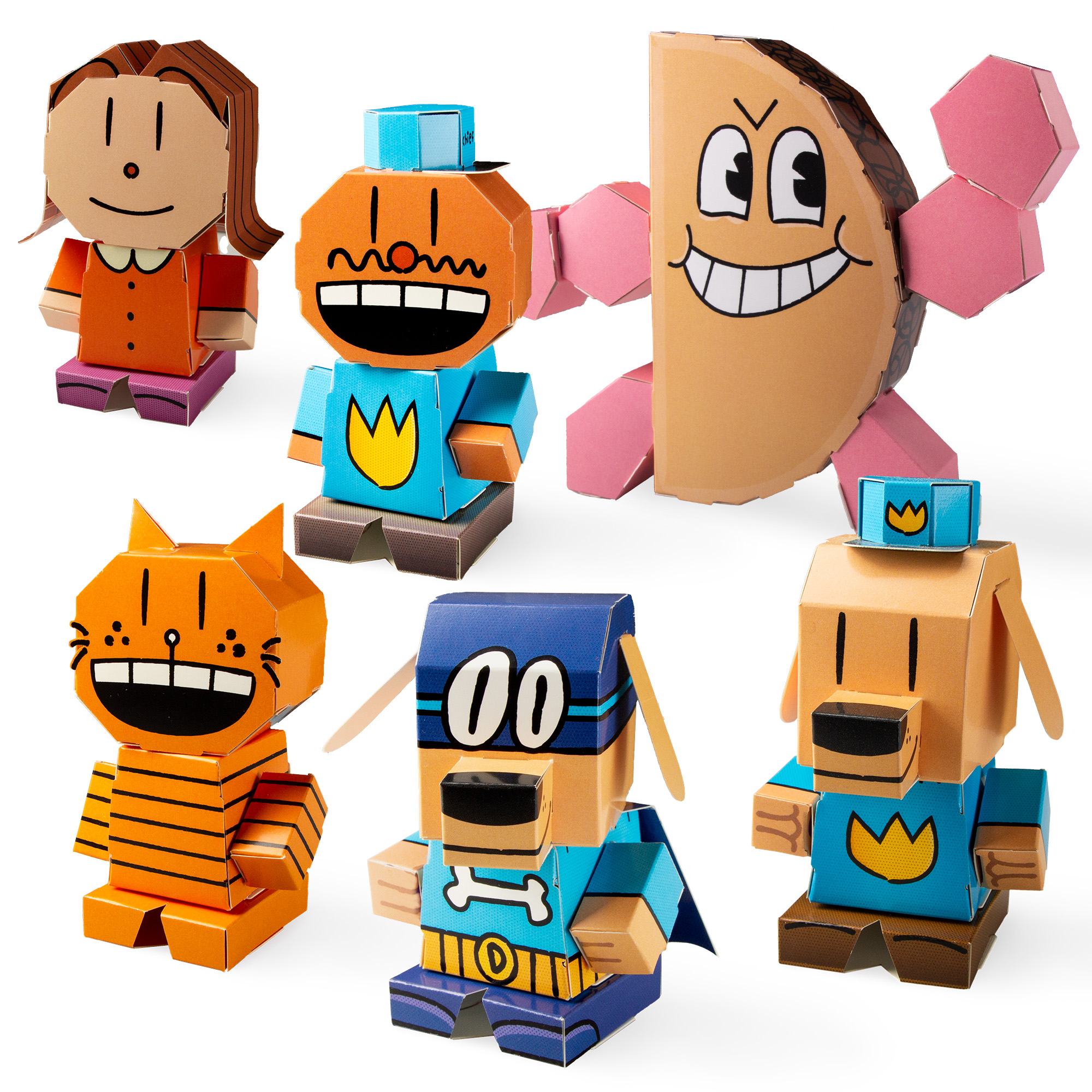
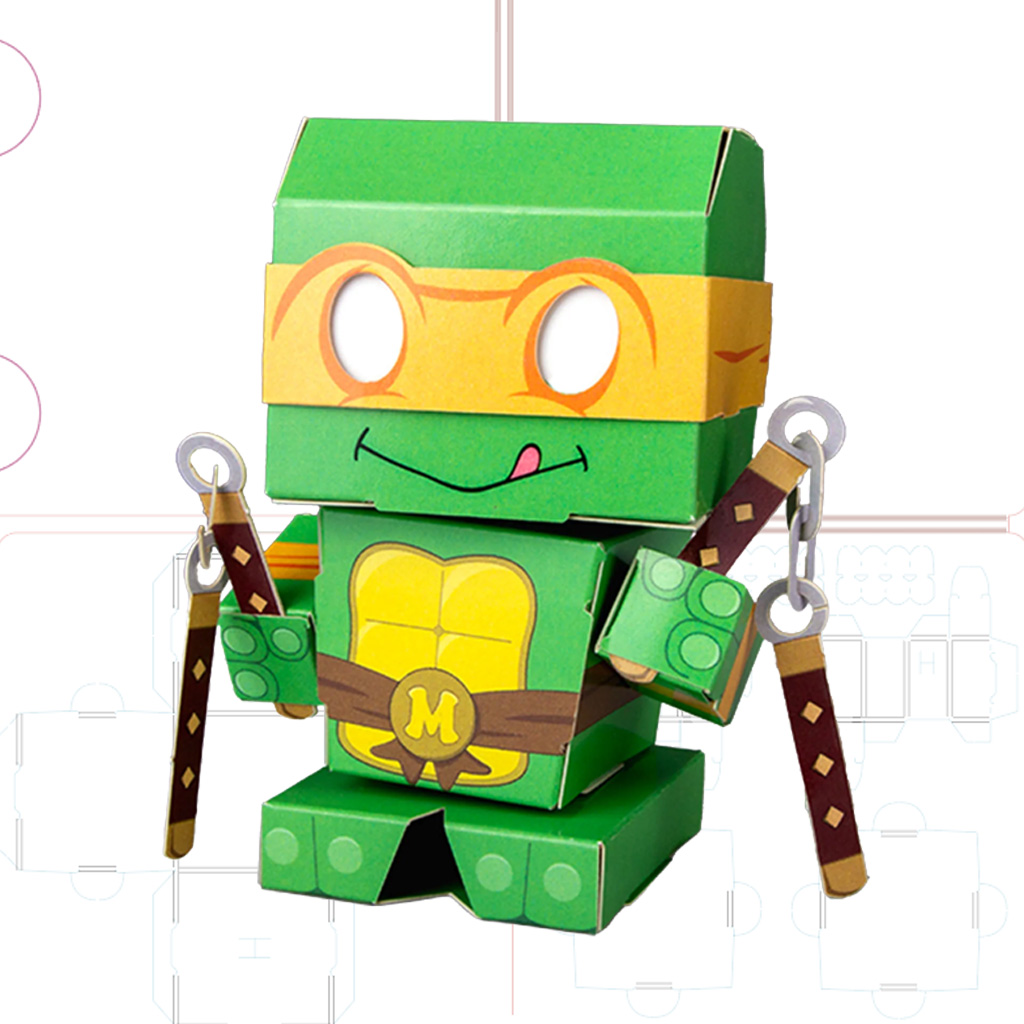
People sometimes look at a Cubles character and think: "It's paper. How hard can it be?" The honest answer? Really hard. Deceptively hard. The kind of hard that keeps our engineering team up at night debating fractions of a millimeter.
Here's a behind-the-scenes look at what it actually takes to design a Cubles character — and why every tiny measurement matters.
It Starts With the Paperboard
Not all paperboard is created equal. The thickness of the material — measured in "points" in the printing industry — determines everything about how a character performs. Too thin, and the panels flex and the character feels flimsy. Too thick, and the folds crack, the tabs won't insert, and small hands can't manipulate the pieces.
We tested dozens of paperboard weights before landing on the one we use today. It's thick enough to feel substantial and hold its shape, but flexible enough that a 6-year-old can fold it cleanly along the score lines. That balance took months to find.
Every Millimeter Matters
When you're working with paperboard, structural integrity comes down to geometry. The span of each panel — the distance between folds — directly affects how sturdy the final shape is. A panel that's too wide will bow under its own weight. One that's too narrow won't give the character enough visual presence.
We measure in fractions of a millimeter. A tab that's 0.3mm too wide won't slide into its slot. A score line that's 0.2mm off-center creates a fold that doesn't align with the panel next to it. When you're building a 3D shape from flat material, these tolerances compound — one small error early in the design cascades through every subsequent fold.
Our die-cutting equipment operates at tolerances that would impress a machinist. But the real precision happens in the design phase, where every dimension is calculated, prototyped, tested, adjusted, and tested again.
The Key Joint: Our Patented Heart
The key joint is what makes Cubles poseable — and it's the piece of engineering we're most proud of. It's an accordion-style connector that locks body parts together while still allowing rotation. Head turns. Arms move. Legs pose.
Designing a joint that works in paperboard is a different challenge than designing one in plastic or metal. Paper doesn't have the rigidity to create snap-fit connections. It doesn't have the elasticity to spring back. So we had to invent something entirely new.
The key joint works by creating interlocking folds that grip through friction and geometry. When you fold the accordion pattern and insert it at 90 degrees, the layers compress against each other and hold. Tight enough to pose. Loose enough to reposition. Strong enough to survive play.
We went through over 50 prototypes before we got it right. The final version is patented — not because we wanted to block competitors, but because we genuinely believe nothing like it existed before. It's a new way to connect paper.
Building Without Step-by-Step Instructions
Here's something most people don't notice until we point it out: Cubles don't come with traditional step-by-step assembly instructions. There's no "Step 1: Fold tab A into slot B" booklet. And that's intentional.
Instead, every piece is printed with numbers and color-coded markings. Matching numbers find their partners. Colors guide which pieces connect. A "1" tab goes into a "1" slot. A blue-marked fold aligns with another blue-marked fold.
Why did we do it this way? Because we believe in discovery. When a child looks at the numbers, finds the match, and figures out how the pieces fit together — that's problem-solving. That's spatial reasoning. That's the "aha" moment we design for.
Step-by-step instructions tell a child what to do. Number and color matching lets them figure it out. There's a world of difference between following directions and solving a puzzle — and we wanted every Cubles build to feel like solving a puzzle.
The numbers also make it accessible across languages. A child in Minnesota and a child in Tokyo can build the same character without translating a single word. Numbers are universal.
Prototyping: Build, Break, Rebuild
Every new character goes through dozens of prototype rounds. Our design team builds each iteration by hand, tests the folds, checks the joints, and hands it to kids to build. Then we watch.
Where do they hesitate? Which fold confuses them? Does the key joint click satisfyingly or does it feel loose? Is the character stable when posed, or does it tip over? Every observation goes back into the design file, and we adjust — sometimes by as little as 0.5mm — and test again.
A character that looks simple on your shelf represents hundreds of hours of iteration. And we wouldn't have it any other way.
From Our Hands to Theirs
Everything is designed, cut, and packaged in Arden Hills, Minnesota. When your child opens a Cubles character, they're holding something that was obsessed over by a small team of people who care deeply about getting it right.
Because when a kid folds that last piece into place and holds up something they built themselves — that moment is worth every millimeter.
Want to see the building process in action? Check out our assembly guide with step-by-step videos.